
Tachiyomi Anime: Can You Watch Anime With It?
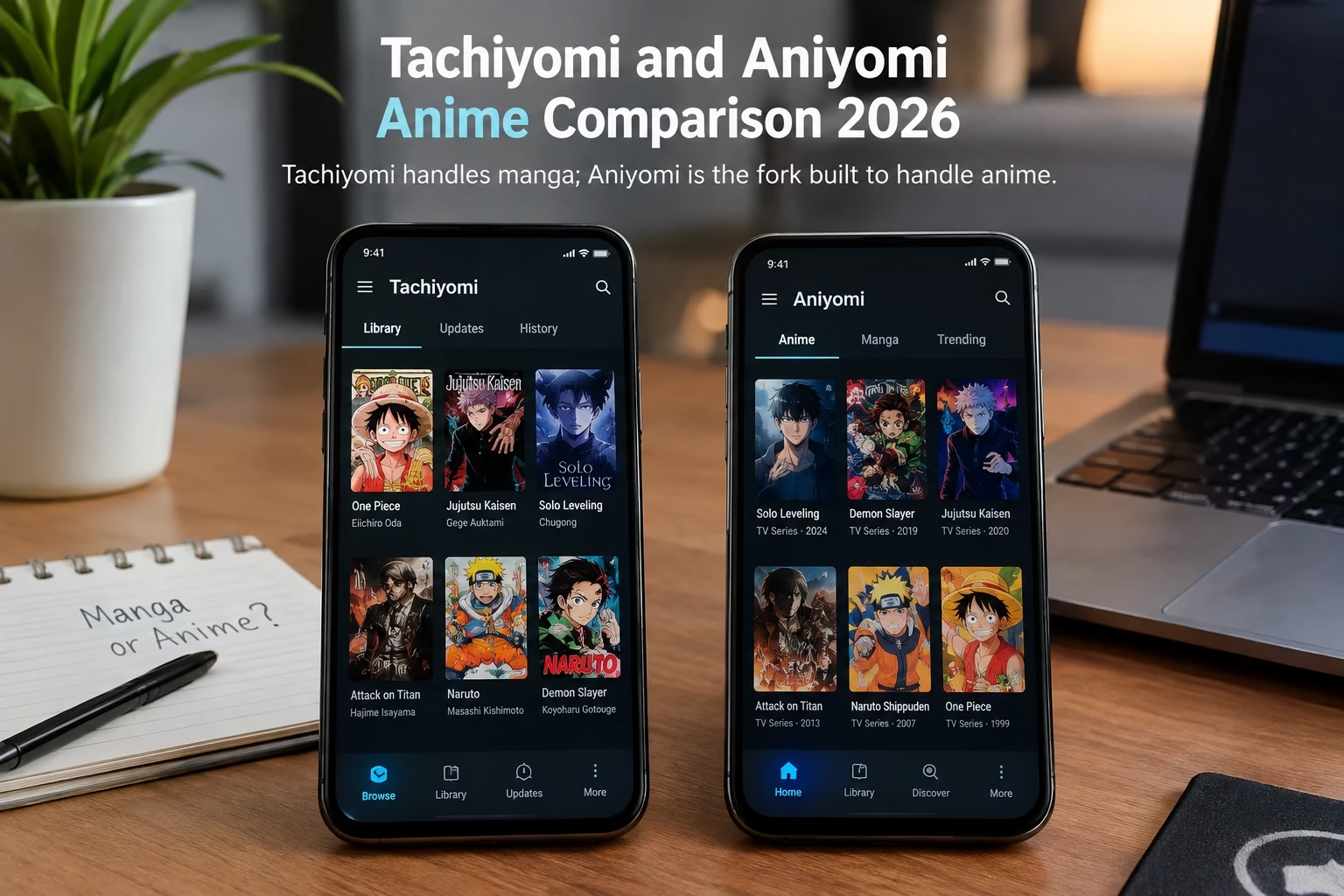
Quick answer: No, Tachiyomi itself can’t watch anime, it’s built purely for reading manga. The short answer to the tachiyomi anime question is Aniyomi, the fork built for that job. It reuses Tachiyomi’s library and reading system, then adds a video player and anime sources on top.
Can You Watch Anime With Tachiyomi?
No. Tachiyomi was designed around one job: pulling manga chapters from extension-based sources and displaying them in a reader. There’s no video player built in, and no anime sources exist for it, because the app was never architected to handle video content in the first place. Anyone researching tachiyomi anime support will find the same answer, the reader is built to display static images in sequence, page by page, not to buffer or stream video files.
If you’ve searched “tachiyomi anime” hoping to find an anime mode hidden somewhere in the app, it doesn’t exist, and it isn’t planned for the original Tachiyomi codebase either, since that project stopped receiving active development. What you’re actually looking for is a separate, related app built specifically for anime from the ground up.
This distinction matters because a lot of readers assume “Tachiyomi” is a general-purpose media app that happens to focus on manga. It isn’t. Everything about its architecture, from how it stores chapters to how its reader renders pages, was built around static images, not video streaming or playback.
What Is Tachiyomi Mainly Used For?
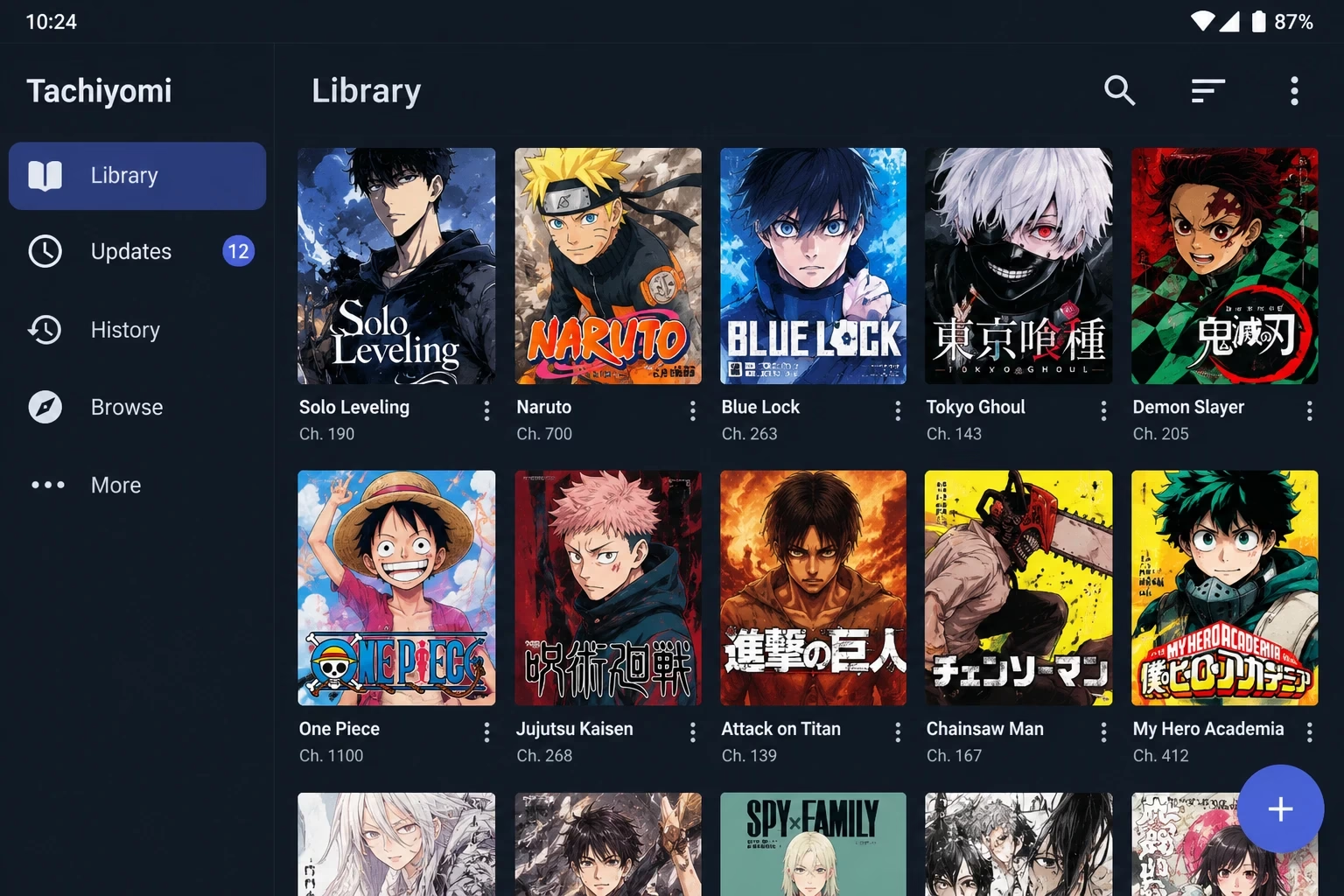
Tachiyomi is a free, open-source manga reader for Android that pulls chapters from community-maintained extension sources, manages your reading library, tracks your progress, and supports offline downloads. If you’re new to the app itself, our Tachiyomi homepage guide covers setup and features in full. This article stays focused specifically on the anime side of things rather than repeating that ground here.
What Should Tachiyomi Users Use for Anime?
The short answer to tachiyomi anime is Aniyomi. It’s built on the same codebase as Tachiyomi, so if you already know how Tachiyomi’s library, categories, and extension system work, Aniyomi will feel immediately familiar, just with anime episodes in place of manga chapters. You won’t need to relearn navigation, settings menus, or how categories and tracking work, since Aniyomi kept that structure intact.
Where Aniyomi Came From: A Quick History of Tachiyomi Anime Support
Aniyomi wasn’t built from scratch. It began as a fork of Tachiyomi’s source code, meaning a group of developers took Tachiyomi’s existing, publicly available codebase and extended it rather than starting over. This is a common pattern in open-source software: instead of rebuilding a library system, a reader engine, and a tracker integration from zero, the Aniyomi team reused what already worked in Tachiyomi and layered anime-specific functionality on top, including a video player and support for anime extension sources.
This history is worth understanding because it explains why Aniyomi feels so similar to Tachiyomi in daily use. The menus, the category system, the backup format, and even the general visual language carry over directly, since a large share of the underlying code is shared rather than reinvented.
What Is Aniyomi?
Aniyomi is an unofficial, open-source fork of Tachiyomi that adds anime-watching capability. Rather than replacing Tachiyomi’s manga functionality, it added to it, so Aniyomi can function as a combined manga-and-anime app. Development is community-driven and separate from Tachiyomi’s own codebase, so updates and extension support move on their own schedule, independent of whatever happens with Tachiyomi or Mihon.
Note: Aniyomi is a community project, not something built or endorsed by Tachiyomi’s original developers. Treat it as a related, independently maintained fork rather than an “official” anime version of Tachiyomi.
How Tachiyomi Anime Sources Work in Aniyomi
Aniyomi uses the same source-extension concept that Tachiyomi uses for manga, just applied to video. This is the core mechanic behind tachiyomi anime support in practice, an anime extension connects Aniyomi to a specific website, letting you search that source for a series and stream or download its episodes. If you’re already familiar with how manga source extensions work in Tachiyomi, our source extensions guide explains that underlying model in more depth, and the same logic applies here with anime sources instead of manga ones.
Because anime sources are community-maintained, their availability and reliability can shift over time in exactly the same way manga sources do, a site can go down, change its structure, or get replaced by a maintained alternative. This is a normal part of using any extension-based, community-driven app rather than a sign that something is broken.
Tachiyomi vs Aniyomi
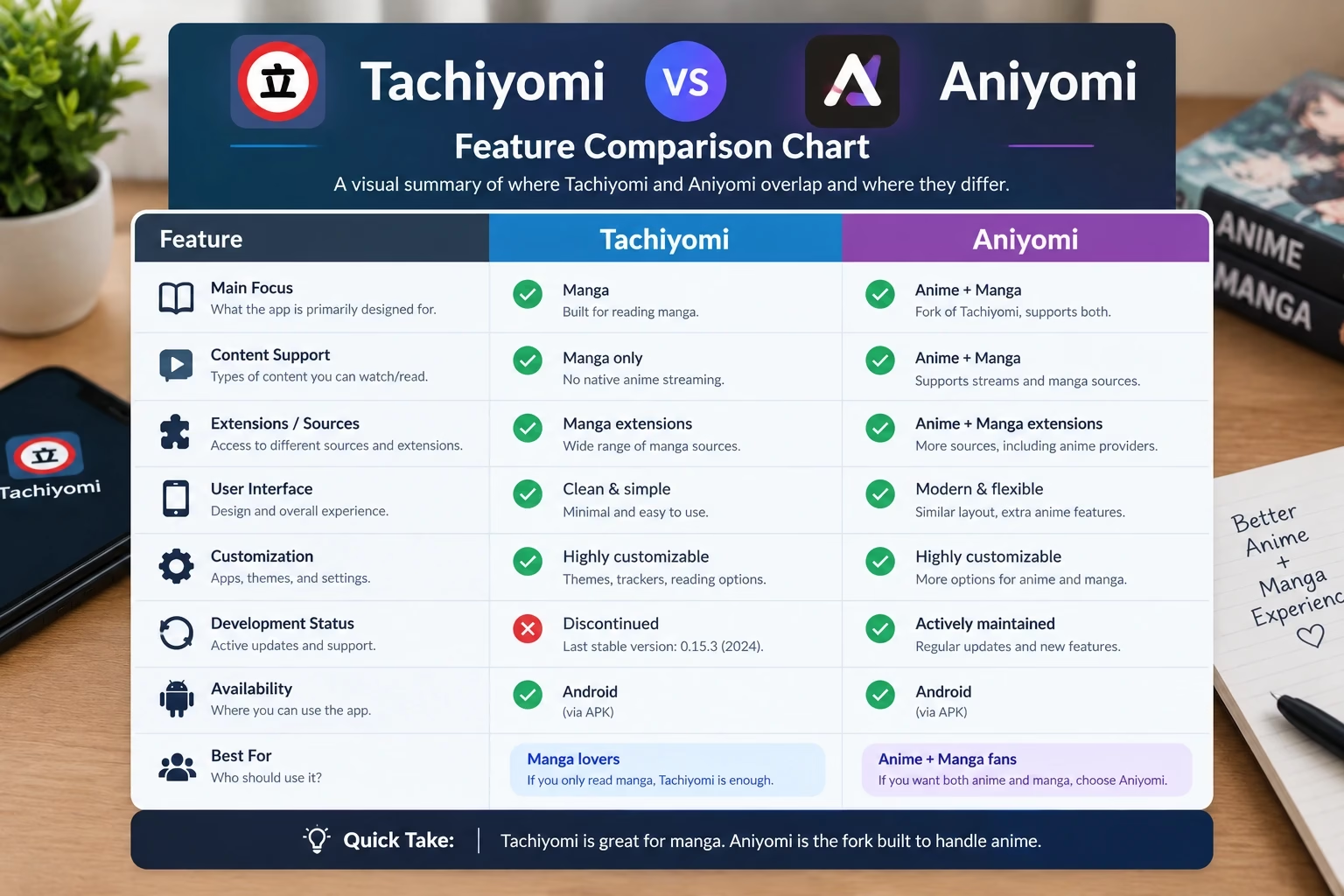
Here’s how the two compare directly, feature by feature:
| Feature | Tachiyomi | Aniyomi |
|---|---|---|
| Manga reading | Yes | Yes |
| Anime watching | No | Yes |
| Video player | Not included | Built in |
| Source-based content | Manga sources only | Manga and anime sources |
| Codebase | Original project (discontinued) | Fork of Tachiyomi, actively developed |
| Backup format | Tachiyomi backup files | Compatible with Tachiyomi-style backups, extended for anime data |
| Storage/battery use | Light (manga images only) | Higher (video streaming/downloads) |
| Primary use case | Reading manga | Reading manga and/or watching anime |
Is Aniyomi Basically Tachiyomi for Anime?
That’s a fair way to describe it, with one caveat: Aniyomi isn’t only an anime app, it’s Tachiyomi’s manga functionality plus anime support layered on top. So rather than “Tachiyomi, but for anime instead of manga,” it’s more accurate to call it “Tachiyomi, plus anime.” The manga side didn’t disappear when anime support was added.
Can You Read Manga and Watch Anime in One App?
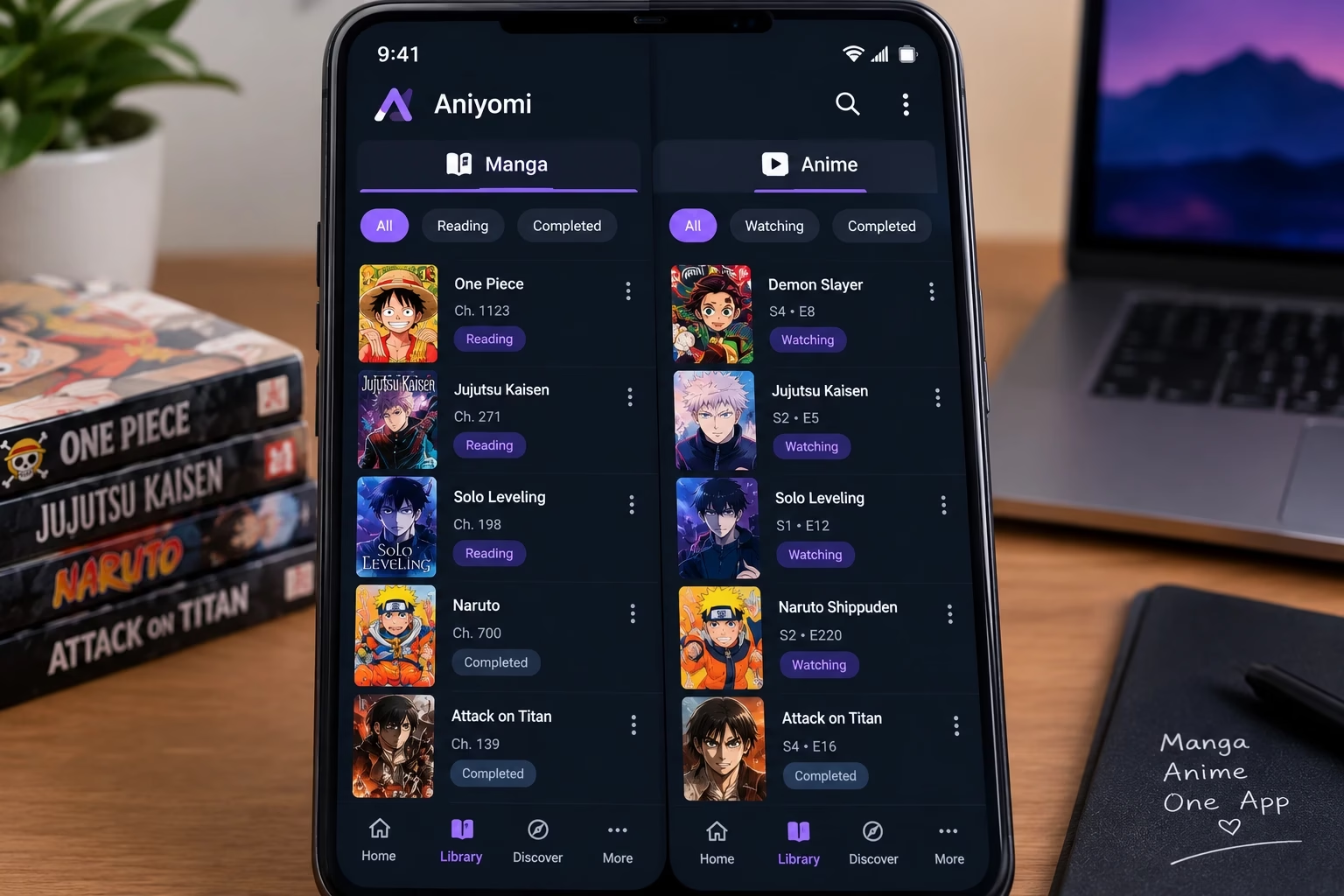
Yes, through Aniyomi. Because it kept Tachiyomi’s manga-reading system rather than replacing it, a single Aniyomi install can manage both your manga library and your anime library, with separate sections for each. You don’t need to run Tachiyomi and Aniyomi side by side just to cover both, one app handles both libraries, both trackers, and both backup systems together.
What Changes If You Move From Tachiyomi to Aniyomi for Anime
If you’re already a Tachiyomi or Mihon user considering the move for tachiyomi anime access, a few practical things are worth knowing upfront rather than discovering by trial and error:
- Your manga library stays familiar. Categories, tracker integrations, and the reader itself work the same way, since they’re inherited from the same codebase.
- You’ll need to add anime source extensions separately from your manga sources, the two extension types aren’t interchangeable.
- Storage planning matters more. Downloaded anime episodes take up dramatically more space than manga chapters, so it’s worth checking your device’s free storage before downloading a full season.
- Backups can grow larger once anime library data and tracking history are included alongside manga data.
None of this requires a full tutorial to understand, it’s mostly a matter of expecting a heavier app footprint once video is involved, rather than a fundamentally different way of using it.
Tachiyomi Anime Migration Checklist
Before switching, confirm your Tachiyomi backup is current, check your device’s free storage, and decide whether you want a combined manga-and-anime library in Aniyomi or prefer keeping them in separate apps.
Are Aniyomi and Its Anime Sources Safe and Legal?
This is worth addressing directly rather than glossing over, since safety is one of the first things people ask once they understand what tachiyomi anime actually points to. Aniyomi itself is open-source, meaning its code is publicly available for anyone to review, which is a reasonable trust signal on its own. The more relevant variable is the anime sources you connect to, since these are community-maintained extensions rather than officially licensed platforms.
A few practical points to keep in mind:
- Source availability and ownership can change over time, the same way manga sources do.
- Not every anime source is guaranteed to be licensed or authorized to distribute the content it hosts, this varies by source and isn’t something Aniyomi itself controls or verifies.
- Sticking to well-known, actively maintained source repositories reduces exposure to abandoned or unreliable extensions.
- If official, licensed availability matters to you, a subscription streaming service remains the more predictable option for that specific need.
We’re not making a blanket claim that all anime sources are safe or legal, that depends entirely on the specific source and your local regulations, and it can change over time. Treat this the same way you would any community-maintained content source: use good judgment, and don’t assume “popular” automatically means “officially licensed.”
Performance, Storage and Battery Considerations
Watching anime is a fundamentally heavier task for a phone than reading manga, and it’s worth planning around that rather than being surprised by it later:
| Factor | Manga (Tachiyomi) | Anime (Aniyomi) |
|---|---|---|
| Typical file size per chapter/episode | A few megabytes | Several hundred megabytes or more |
| Storage planning | Minimal, rarely an issue | Important, especially for downloaded seasons |
| Battery impact while active | Low | Higher, similar to any video streaming app |
| Data usage on mobile networks | Low | High, Wi-Fi downloads are generally recommended |
None of this makes Aniyomi impractical, video streaming apps in general use more resources than text/image readers, this is simply the normal cost of watching anime on a phone rather than something specific to Aniyomi.
Are There Other Tachiyomi Anime Forks?
Aniyomi isn’t the only project in this space. A small number of other tachiyomi anime forks, sometimes built on top of Aniyomi itself rather than Tachiyomi directly, have appeared with their own interface tweaks or feature focuses. These tend to be smaller, less widely used projects compared to Aniyomi’s larger community and extension ecosystem. For most readers coming from Tachiyomi or Mihon, Aniyomi remains the most established and actively maintained option, simply because of how much of the surrounding extension and community infrastructure is built around it specifically.
Which One Should You Choose for Tachiyomi Anime Needs?
Use this as a quick decision guide based on what you actually want to do:
If You Mainly Read Manga
Stick with Tachiyomi, or its actively-updated successor Mihon, since neither needs anime support you won’t use.
Tachiyomi Anime Watchers: Go With Aniyomi
If you mainly watch anime, Aniyomi is the Tachiyomi-style option for tachiyomi anime access, or a licensed streaming service if you want officially distributed anime rather than community sources.
If You Want Manga and Anime Together
Aniyomi is the practical choice, since it already combines both without needing two separate apps.
If Storage or Battery Life Is a Real Constraint
Keep manga and anime separate, using Tachiyomi/Mihon for manga only, so you’re not carrying anime’s heavier footprint if you rarely use it.
Tachiyomi-Style Anime Apps vs Official Streaming Services
It’s worth understanding the difference between these two categories rather than treating them as interchangeable:
- Community/source-based apps like Aniyomi pull anime from community-maintained extension sources, similar to how Tachiyomi pulls manga. Availability and reliability of any given source can change over time, and licensing status varies by source.
- Official streaming services license content directly from studios and distributors, offering consistent availability and higher, more predictable video quality, typically for a subscription fee.
Neither is strictly “better,” they solve different needs. If you specifically want the Tachiyomi-style experience, an open extension system and a self-managed library, Aniyomi fits that. If you want guaranteed, licensed catalogs with consistent quality, a streaming service is the more reliable route.
Common Questions About Tachiyomi Anime Support
No. Tachiyomi is built for reading manga, not watching video. It has no video player and no anime-source support. For anime, Tachiyomi users typically use Aniyomi, a separate fork built for that purpose.
Yes, effectively. Aniyomi is an unofficial fork of Tachiyomi that adds a video player and anime-source support, while keeping most of Tachiyomi’s manga-reading features intact.
Aniyomi is a community-maintained, open-source Android app built on the Tachiyomi codebase. It adds anime streaming from community sources on top of Tachiyomi’s existing manga-reading functionality.
Yes. Aniyomi started as a fork of Tachiyomi’s source code, reusing its library, tracker and reading systems, then extending them to support anime as well as manga.
Yes. Aniyomi retains Tachiyomi’s manga-reading features, so it can function as a combined manga and anime app rather than requiring two separate apps.
You can install both, but it’s usually unnecessary since Aniyomi already includes manga reading. Most users pick one or the other based on whether they want a single combined app or prefer keeping manga and anime completely separate.
Aniyomi itself is open-source and its code is publicly available, which is a positive safety signal. The bigger variable is the anime sources you connect to, since these are community-maintained and their reliability can change over time, similar to manga extension sources.
Streaming or downloading anime uses considerably more storage and battery than reading manga, since video files are much larger than manga chapter images. Downloading episodes over Wi-Fi and managing storage limits helps keep this manageable.
Aniyomi is the closest Tachiyomi-style option for anime, since it shares the same interface philosophy and community-source approach. For official, licensed anime, a streaming service is a separate and more reliable option.
Final Thoughts on Tachiyomi Anime Support
Tachiyomi itself was never built to handle anime, and that hasn’t changed. If you want that same open, extension-based experience but for anime, Aniyomi is the direct answer, and because it kept Tachiyomi’s manga features rather than dropping them, it can realistically replace both apps for readers who want manga and anime in one place. The main trade-off is a heavier footprint on storage and battery once video enters the picture, which is worth planning for rather than a reason to avoid it.